Tag: people

THEN & NOW – “Slavery, Smallholding and Tourism…”


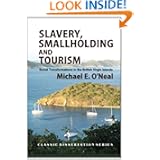
…..Social Transformation in the British Virgin Islands” written by Michael E. O’Neal, PhD – “a Senior Research Fellow at Island Resources Foundation, with offices in Washington, D.C., and the Caribbean.”

I have chosen to take excerpts from Dr. O’Neal’s book so that readers can get, if not the full impact, close to it, the gist of what I am trying to convey without adding or taking away from it. Here in the Virgin Islands, on the eastern end of Tortola there is an area referred to as “Nottingham” and while many of us use the name daily we were never quite sure where it came from or how it came about – the following excerpt from Dr. O’Neal’s book will help to shed some light on that.

“In June 1776, Samuel and Mary Nottingham, who were at the time residing in Long Island, New York, effected a deed of manumission as regards slaves on their Tortola plantation called Longlook…….., also deeding to them in perpetuity their fifty-acre estate. p27.  Besides their liberty and the land, Mr. Nottingham’s negroes were left a legacy of £316.15s sterling by his sister, and which was paid to them by DR. DAWSON of Tortola. Not a fourth part of the property left to them, and some negroes also manumitted by Mr. Perceval, and Mrs. Vanterpool, and Mrs.Frett, remain in their hands.” p28

In looking at the Plantation Era, Dr. O’Neal wrote “the early 1780s in particular was a pivotal period in the history of the Virgin Islands plantation society. During this period, a transition took place from a society of small yeoman farmers and their slaves engaged in the cultivation of tobacco, cotton and provisions, to one based on the production of sugar (and, incidentally, of rum) by relatively large estates. The outcome of this process was the decline and virtual disappearance of the small cotton planter as a result of real estate consolidation precipitated by the expansionist pressures of the larger sugar planters.”p12

At the time of the abolition of slavery in 1834, sugar and cotton were the two main staples of the economy with sugar being the number one seller, however, after the abolition of slavery and several unfortunate hurricanes many of the sugar plantations were destroyed and not rebuilt  – drought added to this problem and as a result the economy drastically declined. The Sugar Duties Act was passed in 1846 by the UK, which did not help the planters or the territory.  Many problems occurred during this period, which reduced the territory to a smallholding and subsistence economy…..

It was not until the mid twentieth century that the economy saw a change…Dr. O’Neal wrote “During the 1950s ….the United States Virgin Islands experienced a dramatic increase in tourism…This windfall phenomenon prompted the British Virgin Islands Government to express the hope that ‘some of the influx may eventually spill over’ into the British Virgin Islands.”

Slavery, Smallholding and Tourism, Social Transformations in the British Virgin Islands is a must read for all who wish to get a better understanding of the transformation and development of the Virgin Islands

Product Details


Historical Information

In the early years of the sugar industries (1900s) people went from the Virgin Islands to Cuba, Puerto Rico and the Dominican Republic to find work – “some of  these seasonal workers settled in the host countries permanently, but most returned home at the end of each ‘sugar season.’”  The families here in the Virgin Islands waited patiently to be reunited with their loved ones – many of the schooners went from San Pedro de Macoris to  Road Town, Tortola, in the Virgin Islands without incident until July, 1926.

The vessel “Fancy Me” was a schooner, which was owned by two brothers, James and Alexander Smith, from Carrott Bay, in the Virgin Islands, “was returning from the port of San Pedro de Macoris on 25th July 1926, with a number of workers from Anegada and Tortola attempting to get back to the Virgin Islands in time for the August 1st Emancipation celebration – unfortunately, this was not to be. After one day at sea, the Fancy Me was caught in a storm and was wrecked on a rock known as El Caballo Blanco or ‘The White Horse” – As there was only one lifeboat, which the crew used leaving the 89 passengers to fend for themselves, 59 men perished as a result.”

The wreck of the “Fancy Me” is recorded in Virgin Islands history as it was one of the worst sea tragedies of its time affecting Virgin Islanders.

(150 Years of Achievement 1834-1984

Then & Now – “Good Old Days”

“On Monday morning, bright and early
Not tired, vexed or even surly,
One rose to tread the path “over the hill”
Without a whimper, but with a will,
To arrive in time for school
For this was the best and safest rule.”
(Taken from: 150 Years of Achievement 1834-1984, By: Pearl Smith)

Then & Now – Brewers Bay Seniors

The Brewers Bay Seniors speak about their early years growing up in the Virgin Islands – how difficult it was but, nonetheless, a good life – living was simple, people worked hard and together, shared whatever they had and children helped in the home – they had to get up early morning to help with the animals, fetch fire-wood for cooking before going off to school – you could buy a “dumb bread” (a round, flat bread without yeast baked flat over the fire on an iron skillet) for one penny and that had to stretch a long way – the popular drink of the day was “sugar and water” – they would mix brown sugar with water and make a refreshing drink to go with the bread or just on its own. One person recounted how her mother gave a penny to her brother with the instructions to “split it” as it was all she had – he tried to do so by pounding it with a rock but was unable to break it only to return home without anything for him or his siblings to eat all day as the baker refused the beaten up coin! His mother had to point out that she meant to split the bread and not the coin. Life was simple and without the necessities that we now-a-days have come to expect, but it was safe and secure with a meaning of purpose and community spirit – the village actually raised the child.

Then & Now – Recounting the Earlier years

My husband, Robin, came to the Virgin Islands forty eight (48) years ago and often recalls how things were in those earlier days.

He first flew out from the UK via New York, San Juan and St. Thomas USVI, where he was met by Captain “Fishy” (Roderick Soares) and brought across on the “MV Sunshine” and was taken to Stephen Dickinson’s office (The first accounting firm in the territory) by the same “Fishy,” where he was shown to a desk and put to work – all in one day, and he only found out where he would be living later that night – the house immediately next to the office, which was located in Road Town – he had no excuse not to be on time!

The movie theatre was in the same building as his office and naturally as a young man in a strange new place and unable to sleep while the movie was in progress he quickly found his way into the projection booth with two local young men, Marshall Davies (deceased) and Ickford (Dandy) Scatliffe – the three soon became fast friends. The cinema was owned by an Englishman by the name of Douglas Williams (Deceased) who had bought the building from Norman Fowler (an American). Douglas had been a war correspondent for The Daily Telegraph in the UK and did a lot to promote the Virgin Islands (British) in the UK – he visited here occasionally and converted the ground floor of his building into two apartments so that he could have a place to stay when in the territory – the ground floor of that building, Robin believes, was the location of the “Tortola Times Newspaper,” the first in the territory before Carlos Downing started the “Island Sun.” In those days the phone system was by “party line” and it was necessary to listen to the number of rings to determine who the call was for – “often when you picked up the phone to make a call you would find someone else speaking so you would wait a while before trying again” – the line was shared with Virgin Islands National Bank (which went through various progressions to become Banco Popular today – it was also known as the First Pennsylvania Bank, NA), J. R. O’Neal – G. A. Cobham (the Landrover and Seagull Engine agency), Jackson’s Insurance Agency Ltd. (now Creques Insurance),  J. A. Storey & Partners (Land surveyors) and surprisingly, Treasure Isle Hotel, which was the other side of town. Just down the road from his office was the premises of Ruth C. Anthony and her husband Alban Anthony (both deceased), with whom he became very friendly, and across the street was the booking office of the Sunshine,  Clarisa’s Beauty Salon and a few small stores – further down the street was J. R. O’Neal Ltd., and Government offices, which included the Post Office.

Back then, the airport, which is on Beef Island, was undeveloped – it consisted of a sandy strip and the weekly flight from Antigua was met by a short wheel based (SWB) Landrover, which was a combination of immigration, customs, fire brigade and baggage handler. Passengers off the flight would walk behind the vehicle to where the bridge connecting to the main island of Tortola is now  to get on a pontoon upon which passengers and luggage were placed – the pontoon would then be pulled across the channel using a “wet slippery rope” in the sea and would be met by the police LWB Landrover, which would take you into town – obviously the Queen Elizabeth II bridge, which was opened in 1966, was a great boom to simplifying travel into and out of the territory by air and getting to the few businesses that were on that end of the territory – one of these was Marina Cay, a small hotel, which was run by Allan and Jean Batham (who left the territory many years ago, returning to New Zealand), another was a Slip-way on Beef Island and a miniscule hotel on Bellamy Cay (now called the Last Resort).

Robin’s account will continue next week….stay tuned…..


Then & Now Historical Information

“In 1823 a Commission of Enquiry was appointed to research into the state of captured Negroes in the West Indies. These were not ostensibly slaves, although in effect they must have been much the same; instead they were called ‘African Apprentices’ but, even so, many of them appear to get little or no wages..The enquiry which was recorded was titled ‘Tortola Schedules,’ and gives dozens of stories of individuals, including their African names, their tribes, and the history of what happened to them since they arrived in Tortola.

One case study from the ‘Tortola Schedules’ reads: One case was that of George and William, cartwhipped by their master J.P. Doan….the doctor who examined them stated ‘I examined the Apprentices the day they were punished; I saw that the flesh was torn from their posteriors in many places, and bore evident marks of the Cartwhip — the blood on their dinner was fresh.'” (Early History of the British Virgin Islands, From Columbus to Emancipation – By: Vernon W. Pickering) 

Evidently, life was not easy for those who came before, even when they were not referred to as slaves, but their treatment at the hands of those whom they called “Masters” left little to the imagination of their true position in that society.

Then & Now Senior Moments part 2

The seniors quiz night at the Sir Rupert Briercliffe Hall continues this week. These senior citizens show that they are still alert with functioning long term memories – it was truly a blessed occasion as we listened to memories from days past – I think it is safe to say that we drank it up and hungered for more – “Memory is a way of holding onto the thing you love, the things you are, the things you never want to lose. The Wonder Years.” Jessica McMahan –  May the heavenly Father continue to bless all our seniors as they do what they can to help us understand the past and gain respect for our culture.

Then and Now Senior moments

This week features the Seniors at the Sir. Rupert Briercliffe Hall on May 16, 2012 taking part in a General Knowledge Challenge. It was an evening of fun and entertainment as we watched the senior compete for the top spot as they recall historical details about life in the Virgin Islands. Please stay tuned to CBN CH51 on Sunday and Wednesday at 8PM, and if you miss those two you can catch it again on Saturday at 8AM and Sunday at 4PM. You can also watch this on live stream at www.cbnbvi.com

Then & Now recall historical events – The Moyne Commission

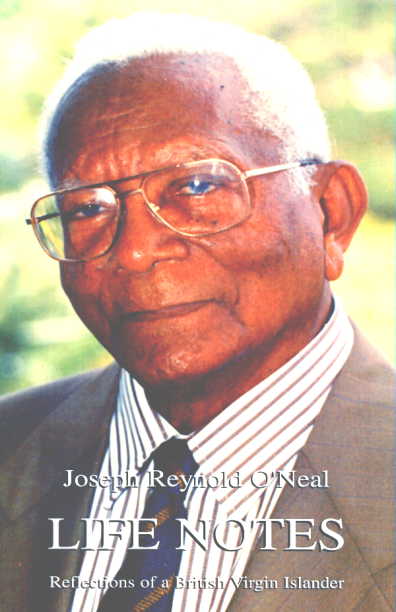
In Life Notes, J. R. O’Neal wrote “it was in the 1930 that I became involved with the Civic League, the brain child of Hope Stevens of New York, East End and Nevis.” The league was formed because a group of men, concerned Virgin Islanders who felt the need for “political representation…we had none at that time,” JR (as he was affectionately known) wrote. He went on to say that there was “an Executive Council which was comprised of two local people nominated by the Governor of the Leeward Islands….these were James Edward Wilkinson (J.E.W) Georges and William Campbell Roy.” And this was how the League “came to meet with the Royal West India or Moyne Commission, known after its head Lord Moyne, which was created in response to the riots in almost every colony in the Caribbean between 1930 and 1935.” (J.R.O’Neal) The Moyne Commission report gave an in-depth analysis of the  riots and strikes that occurred in the Caribbean in the 1930s. What is rather interesting is that the report made several recommendations, such as legislation to protect trade union and peaceful picketing, creation of labour department and wage boards and the provision of workers compensation and unemployment insurance to name a few. And it supported greater representation by locals in the government. This report was not made public until 1945 although some of the recommendations were implemented prior to that. (Institute of Commonwealth Studies)

Then & Now visit with Mrs. Phillis George

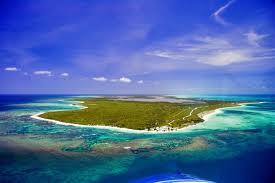
This week I visit with Mrs. Phillis George as she recalls her early childhood memories on the island of Anegada in the Virgin Islands. Anegada is the northernmost island in the chain that makes up the Virgin Islands. (Photo from Wiki) You can see and hear Phillis on CBNBVI Ch51 or on live stream at www.cbnbvi.com – Sunday and Wednesday night at 8PM and Saturday morning at 8AM.